
An 11-member Indian team, including medical and tunnel-rescue specialists, has arrived in Nepal to assist in the rescue of workers trapped in hydropower project tunnels following devastating flash floods. The disaster has killed hundreds, left thousands missing, and damaged critical infrastructure, prompting Nepal to seek international aid for rescue and reconstruction.

China on Monday dismissed claims linking its massive hydropower projects in Tibet to the August 26 flash flood disaster in Nepal, calling them "malicious speculation".

The objective should be clear: Energy security without abandoning environmental responsibility; water security without ignoring local concerns; and strategic resilience without sacrificing public confidence, notes Varun Arya.
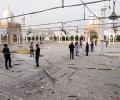
'The close collaboration between Pakistan and China, and the assistance Pakistan receives, is a factor in our planning, and the IAF is building its capacity to counter precisely such collusive threats.'

Union Home Minister Amit Shah has assured residents of Siang Valley that their concerns regarding the proposed 11,200-MW Siang Upper Multipurpose Project (SUMP) will be addressed through dialogue. Shah emphasised the project's national importance for Arunachal Pradesh's development and strategic interests, promising attractive rehabilitation packages and no compromise on local culture. This assurance comes amidst sustained opposition from indigenous communities worried about environmental, livelihood, and cultural impacts.

The Indo-Tibetan Border Police (ITBP) is undergoing a significant modernization drive, establishing drone platoons, developing a new 'Strike' course for Galwan-like situations, and constructing underground infrastructure along the Line of Actual Control. This strategic shift, announced by DG Shatrujeet Singh Kapoor, aims to counter China, identified as India's 'biggest adversary,' by embracing modern warfare techniques learned from recent global conflicts.

Katon Moyong, an engineer-turned-activist known as 'Abor Man', has rejected the Arunachal Pradesh government's offer for talks regarding the proposed 11,200-MW Siang Upper Multipurpose Project. Moyong, who was recently detained for protesting the project, dismissed the government's national security argument as a tactic to overcome public resistance. The Adi community opposes the dam due to concerns over displacement, submergence of ancestral lands, and cultural impact, while the government cites water management and national security, particularly concerning China's upstream dam plans. Moyong alleges political motivation behind the project and calls for tribal unity against it.

India's Indo-Pacific approach has traditionally emphasised strategic autonomy, ASEAN centrality, freedom of navigation, respect for international law and an inclusive regional order. Its growing defence and maritime partnerships with Australia, Japan, Indonesia, Vietnam and other Southeast Asian countries provide additional depth to this approach, point out Dr Kumar and Dr Jasmeet Kaur.

Prime Minister Narendra Modi has announced a significant 24,000 crore Nepalese rupees development package for Nepal, further solidifying bilateral ties and launching key India-assisted projects, including a new cross-border passenger rail link between Ayodhya and Janakpur Dham. This move signals a major reset in relations after a period of strain over border disputes, with both leaders emphasising deep kinship and mutual support.

Bangladesh-China and Bangladesh-US relations have evolved from reluctant engagement to increasingly consequential strategic partnerships.

Nepali Army engineers are intensifying rescue efforts for hundreds of workers trapped in hydropower project tunnels in flood-hit Nuwakot and Rasuwa districts. International teams from India and China have joined the complex operation, which involves heavy equipment and blasting to reach those out of contact, particularly at the Upper Trishuli-3A project.

China has announced new export controls on key machinery, including tunnel boring machines, walking excavators, and dredger components, citing national security. These restrictions, effective November 18, could significantly impact India's infrastructure projects, such as metro systems and high-speed rail lines, as China has previously limited such exports to India.

Air Chief Marshal AP Singh, Chief of Air Staff, has expressed significant concern over the inordinate delays in inducting new combat jets, including the indigenous Tejas aircraft, stating that these delays are severely impacting the Indian Air Force's depleting fighter squadron strength. He highlighted the need for 36-40 new fighter jets annually to address these gaps and voiced worry over Pakistan's collaboration with China on a fifth-generation fighter jet.

India and China are in what experts call 'a cooperation-versus-competition situation'.

It is very unfortunate that China has decided to proceed with the controversial mega hydropower plants(despite the apparent opposition of many scientists in China). Why is Delhi silent about the development? asks Claude Arpi.

A powerful magnitude 7.0 earthquake struck China's Tibet region on Thursday, resulting in at least 16 fatalities and 54 injuries. The quake, with its epicentre east-northeast of Nagqu city, caused significant damage, including the collapse of 339 houses, and led to the suspension of train services. Rescue operations are underway, with Chinese President Xi Jinping calling for all-out relief efforts.

The goal is to make the nation's total installed capacity of nuclear power reach 40 million kilowatts by 2020.

'The Chinese military cannot advance much in Ladakh, even if they want to.' 'Similarly, in Arunachal Pradesh, they can rename a village or two, intrude here or there, but cannot do much more realistically.'

China sailed through the crisis in the Strait of Hormuz relatively unscathed even as the impact of its steps shielded other consuming nations from having to pay high crude oil prices.

Indigenous communities fear that a large reservoir could submerge ancestral land and settlements, disrupt traditional livelihoods and damage forests, wildlife habitats and river ecosystems in a seismically active Himalayan region.

'We have become so unequal that we are among the most unequal countries in the world.'

Gwadar is viewed as a critical pearl in China's maritime strategy as it would give a permanent logistical footprint near an important choke point - the Strait of Hormuz and the oil rich Persian Gulf, explains Commodore Venugopal Menon (retd).

Luiz Incio Lula da Silva has clinched a historic fourth term as Brazil's president, navigating a contentious election against Flavio Bolsonaro who refuses to concede.

The International Atomic Energy Agency (IAEA) has concluded its first physical protection advisory mission to Pakistan, stating that the country has established a "robust nuclear security regime" for its nuclear material and facilities. The mission, conducted from September 28 to October 9, reviewed Pakistan's legislative framework and assessed measures at a nuclear facility, noting continuous improvements and contributions to nuclear security expertise.

The Arunachal Pradesh government has launched an ambitious plan to build 50 mini hydropower projects along the border with China for electrification of remote villages that are facing challenges of poor connectivity and mountainous terrain.
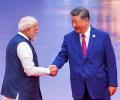
For India, China's Indian Ocean power projection, maritime domain awareness, dual-use ports, underwater surveillance, antisubmarinewarfare, naval exercises with Pakistan, pose considerable pressure, depleted India's strategic depth and marginalises Indian role, points out Srikanth Kondapalli.

Beijing clearly intends to extend the China-Myanmar Economic Corridor to Bangladesh as part of its larger Maritime Belt and Road Initiative to boost its Indian Ocean presence.

'While the population remains relatively young, its age structure is beginning to shift, setting the stage for a much older population later this century.'

Persistent rain has caused significant disruptions at the Asian Games, affecting tennis, surfing, and cricket, leading to India and Pakistan advancing to the T20 semi-finals due to higher rankings after their quarter-final matches were washed out.

Beyond imprisonment, candidates caught cheating face cancellation of examination scores, blacklisting under China's social credit system and multi-year bans from appearing in state examinations.

India's ruling Bharatiya Janata Party (BJP) is actively courting Sri Lanka's Janatha Vimukthi Peramuna (JVP), a Marxist party with strong Sinhalese nationalist roots, marking a significant shift in bilateral relations despite ideological differences. This engagement, highlighted by a recent high-profile visit by JVP leader Tilvin Silva, aims to foster cooperation on economic projects and address New Delhi's concerns over slow progress in India-aided initiatives in the island nation.

Air Chief Marshal AP Singh has voiced concerns over significant delays in inducting new combat jets, including the Tejas aircraft, which are impacting the Indian Air Force's depleting fighter squadron strength. He stressed the need for annual induction of 36-40 jets to address the gaps and discussed ongoing procurement plans like the MRFA deal and future strategies for combat aircraft and theatre commands.

'Stardom is relative and script is the star. It is not one size fits all.'

A new report suggests China's maritime vulnerability lies in the Strait of Hormuz, not Malacca, creating strategic competition in the Indian Ocean.

Two IIT Gandhinagar students have developed "TrustGate," an AI-based cybersecurity system designed to protect critical infrastructure like water treatment plants and power grids. The system uniquely combines network traffic and physical sensor data to detect sophisticated cyber attacks, identify affected equipment, and provide real-time alerts to operators, earning them an international award.

With over 75 per cent indigenous content, the frigate is among the most self-reliant frontline warships built in India.

This article details the quarter-century journey of BRICS, from its inception as an economic acronym by a Goldman Sachs economist to its current status as an expanded eleven-member international bloc. It highlights its growth, key historical moments, and the significance of its upcoming summit, particularly with Iran's renewed importance in discussions.
Back after roadshows across the globe, Power Minister Sushilkumar Shinde on Thursday exuded confidence that foreign investors will line up for the government's ambitious ultra mega power projects.

India and Australia have signed significant agreements covering civil nuclear energy, maritime security, and critical minerals, reinforcing their partnership's role in ensuring a peaceful Indo-Pacific. The pacts facilitate uranium supply from Australia to India and enhance cooperation in defence, cyber, and critical technologies.

'India is trying to project that it can engage with the world in a different way too.'
